Blog Details
02Sep
Nepal Flood Update: Which Areas Are Affected and Which Remain Open
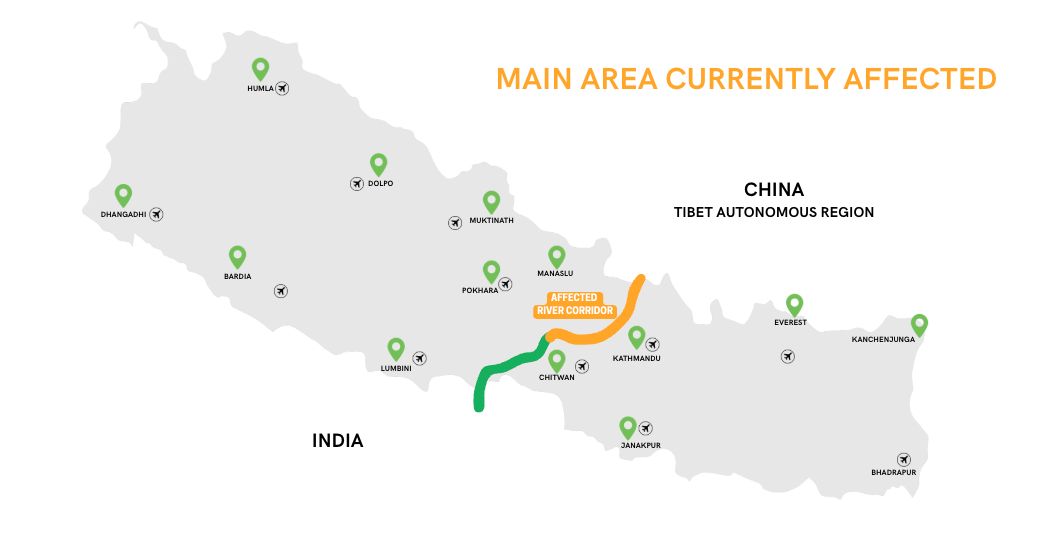
It has been a week since the disaster affected parts of Nepal. While the situation remains serious in the areas directly impacted, it is important to understand that the disruption is geographically concentrated, mainly around the Trishuli River corridor and surrounding areas.
The rest of Nepal continues to operate largely as normal.
The Situation on the Ground
More than 21,000 personnel from the Nepal Army, Nepal Police and Armed Police Force are currently involved in rescue, relief and recovery operations. Teams continue to work around the clock in the affected areas.
The most significant damage has been reported along sections of the Trishuli River corridor, including parts of the road network connecting Kathmandu with Pokhara, Chitwan and further towards Muktinath.
Some sections of this major highway have been swept away, and travel by road is currently affected. Alternative routes are already beginning to operate, although travellers should expect longer journey times and some traffic congestion.
Major Tourist Destinations Remain Open
Kathmandu, Pokhara and Chitwan continue to operate normally.
Hotels, restaurants, shops and tourism businesses remain open. Airports are also operating, including domestic flights connecting Kathmandu with major destinations.
Pokhara is particularly accessible by air, with a domestic flight from Kathmandu taking around 25 minutes. For travellers who would otherwise travel by road, flying can provide a practical alternative while road conditions improve.
Trekking Regions
The major trekking regions, including Annapurna and Everest, remain operational.
However, conditions vary between regions, and access should be checked before travelling. The Langtang region has been significantly affected, so travellers planning to visit Langtang should obtain updated information on trails, roads and alternative access routes before finalising their plans for the upcoming season.
Other trekking areas in Nepal continue to prepare for the season.
Should You Cancel Your Trip to Nepal?
For travellers who already have plans for Nepal or are considering visiting in the coming season, the current situation does not mean that the entire country is inaccessible.
Instead of cancelling Nepal altogether, adjust your itinerary according to the latest local conditions.
A road journey may need to be replaced with a domestic flight. A particular trekking region may need to be changed for another. Some itineraries may simply require additional travel time because of road conditions.
The best approach is to look at the specific destinations and routes in your itinerary rather than considering Nepal as one affected area.
Nepal's Tourism Communities Are Ready
Across the country, hotels, guides, porters, tea houses, community hosts, restaurants and other tourism businesses are preparing for the upcoming season.
For many communities, tourism provides an important source of income. Continuing to travel to destinations that are open and safe can help keep this network of local businesses active during a difficult period.
Nepal has always been a country where conditions can vary dramatically from one region to another. At this time, that distinction is particularly important.
Adjust the itinerary, but don't cancel Nepal.
Travel plans may need to change, routes may need to be modified, and certain destinations may require more time to recover. But much of Nepal remains open and ready to welcome visitors.
As rescue and recovery efforts continue in the affected areas, Nepal needs its tourism communities to remain active and Nepal needs you all more than ever.
Frequently Asked Questions
1. Is Nepal safe to visit after the recent floods?
Yes, it is safe to visit Nepal. While the country has been seriously affected in specific areas, particularly around the Bhote Koshi–Trishuli River corridor, the impact is not uniform across the country. Travellers should check the latest conditions for their specific destination and route rather than considering the entire country to be affected.