Blog Details
13Aug
Ayurveda in Nepal: The Himalayan Roots of Traditional Healing
When people hear the word Ayurveda, they may think of herbal oils, massages, wellness retreats, or Panchakarma treatments.
But in Nepal, traditional healing is much more than a wellness experience offered to visitors.
For generations, knowledge of plants, food, seasons, healing practices, and the human body has been passed through families, communities, monasteries, traditional practitioners, and Ayurvedic physicians. In many parts of the country, the natural environment itself has long been regarded as a source of medicine.
The Himalayas, with their extraordinary diversity of forests, alpine meadows, valleys, and high-altitude ecosystems, have played an important role in this relationship between people and medicinal plants.
Today, that knowledge exists alongside modern healthcare. In Kathmandu, Ayurvedic hospitals, clinics, pharmacies, and wellness centres offer traditional treatments to a new generation, while in rural Nepal, elements of traditional healing continue to form part of everyday community life.
To understand Ayurveda in Nepal, therefore, is to look beyond the treatment room—to the forests, mountains, people, and generations of knowledge that have shaped Himalayan healing.
What Is Ayurveda?
The word Ayurveda comes from two Sanskrit words: Ayus, meaning "life," and Veda, meaning "knowledge" or "science."
It can therefore be understood as the knowledge of life.
Ayurveda developed over many centuries within the broader intellectual and spiritual traditions of the Indian subcontinent. Ancient Sanskrit texts, including the Charaka Samhita and Sushruta Samhita, contain extensive discussions of health, diet, medicinal plants, diagnosis, surgery, and approaches to maintaining wellbeing.
Its philosophy extends beyond treating illness. Ayurveda traditionally considers health as a balance involving the body, mind, behaviour, environment, diet, and daily routines.
This holistic understanding is one reason Ayurveda fits naturally into conversations about wellness today.
But it is important to recognise that not every traditional healing practice in Nepal is Ayurveda.
Nepal has always been home to multiple systems of knowledge. Ayurvedic medicine exists alongside Tibetan or Himalayan medical traditions, Buddhist healing practices, and the diverse healing traditions of Nepal's many indigenous communities.
Together, these traditions form a fascinating and complex history of Himalayan healthcare.
The Himalayas: A Natural Pharmacy
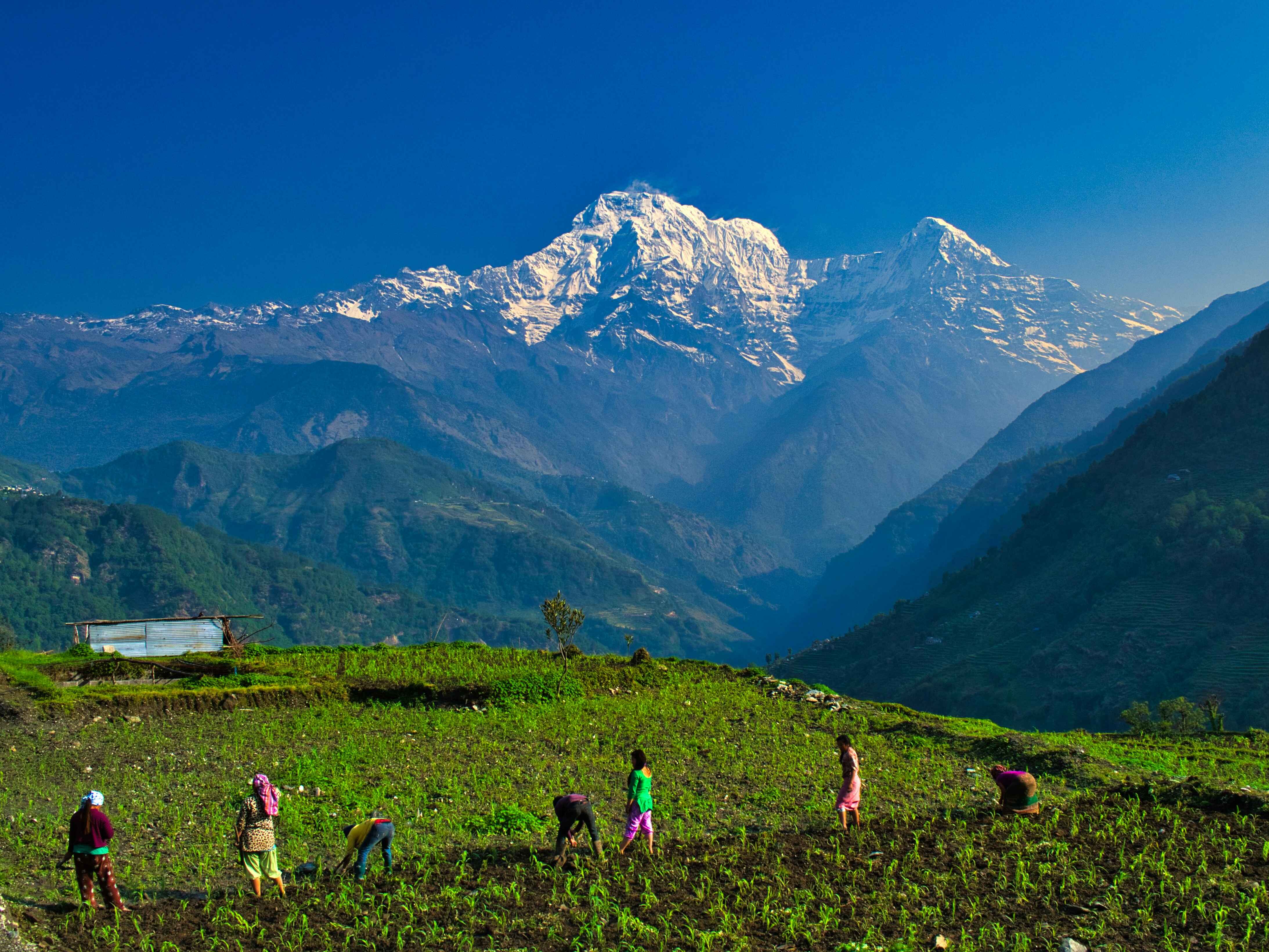
Nepal's geography is extraordinary.
Within a relatively small area, the country rises from the subtropical plains of the Terai through temperate forests and alpine valleys to some of the highest mountains on Earth.
This dramatic variation in altitude, climate, and ecology has created an exceptionally diverse range of plant life.
For Himalayan communities, forests have historically provided far more than firewood, food, and building materials.
They have also been sources of medicinal plants.
Knowledge about these plants was developed through generations of observation and experience: knowing where a particular plant grows, when it should be collected, which part should be used, how it should be prepared, and how it should be stored.
In this sense, traditional medicine was closely connected to the landscape.
A forest was not simply somewhere to walk through.
It could also be a pharmacy, a source of food, a spiritual landscape, and a repository of community knowledge.
From Ancient Texts to Himalayan Communities
The intellectual roots of Ayurveda are deeply connected to the Sanskrit traditions of the Indian subcontinent, while the wider Himalayan region became an important landscape for spiritual practice, medicinal knowledge, and the exchange of ideas.
The Vedic traditions contain some of the earliest references to plants and healing practices in South Asian literature. Over centuries, medical knowledge became increasingly systematised through classical Ayurvedic texts.
As these traditions interacted with the cultures of the Himalayan region, knowledge of medicinal plants also developed within local communities.
This is one reason it is difficult to tell the story of traditional medicine in Nepal through a single tradition.
A plant used according to Ayurvedic principles may also have a history of use within a particular ethnic community. Himalayan Buddhist communities developed their own sophisticated medical traditions. Shamans and traditional healers preserved knowledge through oral transmission and ritual practice.
Rather than one system replacing another, different traditions often existed side by side.
Himalayan Herbs and the Knowledge Behind Them
Nepal is home to hundreds of plants that have traditional medicinal uses.
Some have become well known beyond the communities where they grow.
Titepati
Titepati—commonly associated with species of Artemisia—is one example of a plant familiar to many Nepali households.
Traditionally, different communities have used it in a variety of household, medicinal, aromatic, and ritual practices.
In some rural settings, people may still turn to locally known plant remedies for minor everyday problems, drawing on knowledge passed through families.
This doesn't mean that traditional remedies should replace medical treatment, particularly for serious injuries or infections. Rather, examples like Titepati demonstrate how knowledge of plants can remain embedded in ordinary life.
Timur
Timur, a Himalayan species of prickly ash, is both a culinary spice and a plant with a long history of traditional use.
Its distinctive flavour is familiar in Nepali cuisine, while traditional practitioners have also valued the plant for medicinal purposes.
Chiraito
Chiraito is a bitter Himalayan herb traditionally used in herbal medicine and has long been associated with traditional approaches to health.
Jatamansi
Jatamansi is a Himalayan aromatic plant that has been valued in traditional medicine and religious practices.
Kutki
Kutki is another high-altitude medicinal plant associated with traditional Himalayan medicine.
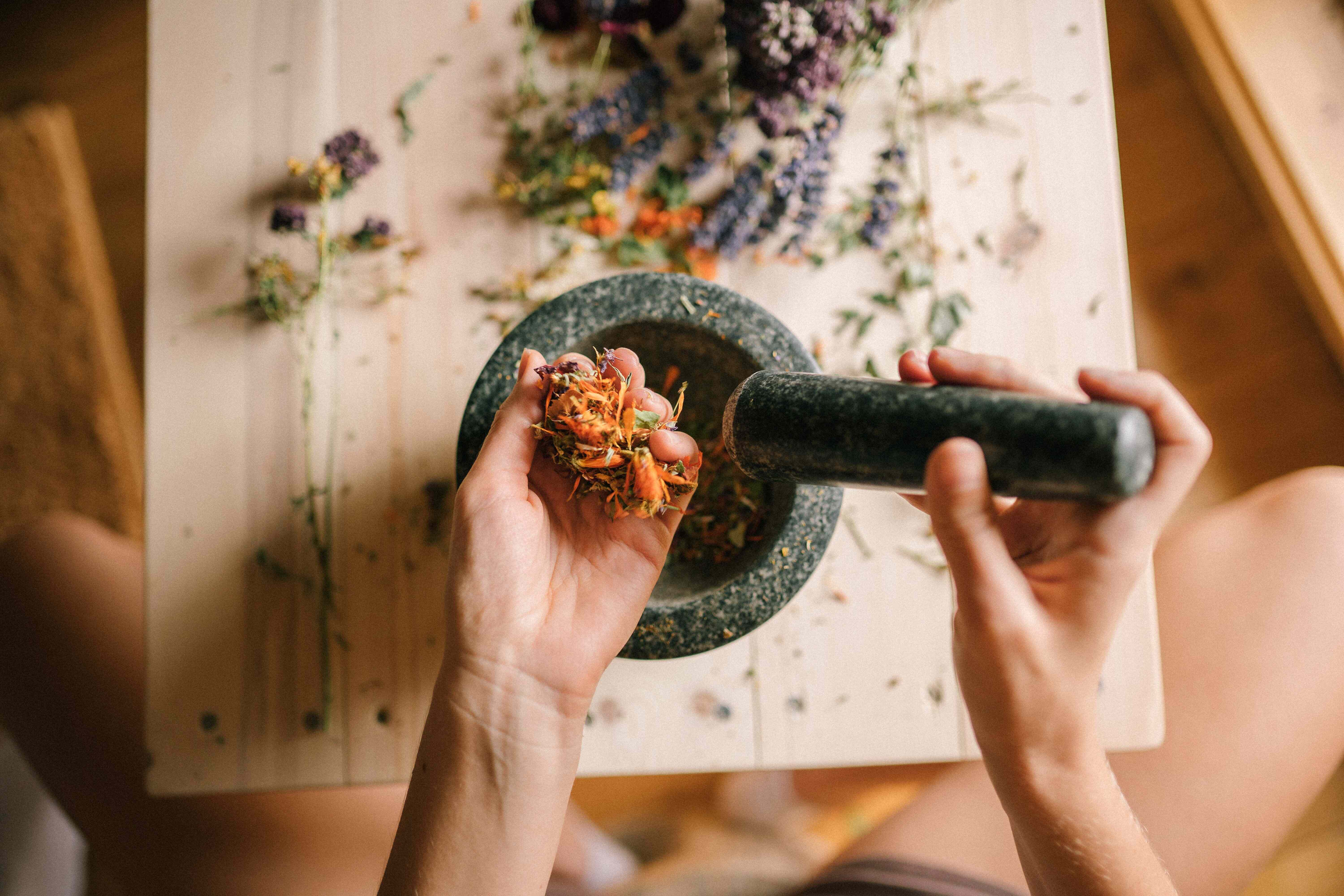
These plants illustrate an important point: medicinal plants are not necessarily separate from everyday culture.
Some are eaten. Some are used in households. Some are associated with rituals. Others are prepared by specialised practitioners.
The knowledge surrounding them can be as important as the plants themselves.
Yarsagumba: The Himalayan Fungus with Cultural Significance
Few Himalayan medicinal resources have become as famous as Yarsagumba.
Known scientifically as Ophiocordyceps sinensis, Yarsagumba is a parasitic fungus associated with high-altitude ecosystems of the Himalayas.
It has a long history of use within traditional Himalayan and Tibetan medicine and has become economically significant for communities living in high-altitude areas of Nepal.
Every year, collectors travel into remote alpine regions during the harvesting season.
The practice is not simply about collecting a valuable natural product. For some communities, Yarsagumba has become connected to seasonal migration, household income, local economies, and a broader cultural relationship with the high mountains.
At the same time, its popularity has raised important questions about sustainability, conservation, harvesting pressure, and the future of Himalayan ecosystems.
This makes Yarsagumba a useful example of the complicated relationship between traditional medicine and modern demand.
The value of Himalayan medicinal plants cannot be separated from the health of the ecosystems in which they grow.
The People Who Preserved Nepal's Healing Knowledge
Plants alone don't preserve traditional medicine.
People do.
For generations, knowledge has been carried by different kinds of practitioners and community knowledge holders.
Ayurvedic Physicians
Nepal has a long-established Ayurvedic medical tradition, with trained practitioners studying classical Ayurvedic principles, diagnosis, medicinal plants, diet, and therapies.
Today, Ayurvedic doctors work in hospitals, clinics, pharmacies, and private practices, particularly in Kathmandu and other urban centres.
Traditional Herbal Practitioners
In rural areas, knowledge of medicinal plants has often been passed through families and communities.
A person may know which plant grows on a particular hillside or which herb is traditionally prepared in a particular season without having learned that knowledge through a formal medical institution.
This type of knowledge is often oral rather than written.
Shamans and Traditional Healers
Many of Nepal's ethnic communities have their own healing traditions.
Shamans and ritual specialists may combine knowledge of plants and traditional remedies with ceremonies, spiritual practices, and community beliefs.
These practices should not simply be labelled "Ayurveda." They represent their own cultural traditions and deserve to be understood on their own terms.
Himalayan and Buddhist Medical Traditions
In Nepal's Himalayan and Tibetan Buddhist communities, traditional medical knowledge has also been influenced by Tibetan medical systems, often broadly associated with Sowa-Rigpa.
Monasteries and traditional practitioners have historically played important roles in preserving knowledge of medicinal plants, diagnosis, diet, and holistic wellbeing.
The result is not one single Himalayan medicine, but a rich landscape of overlapping traditions.
Traditional Healing Still Lives in Nepali Villages
Perhaps the most fascinating aspect of traditional medicine in Nepal is that it isn't only found in ancient texts or specialist clinics.
Elements of it can still be found in ordinary village life.
A family may know which local plant is traditionally used for a particular household remedy. Someone may prepare herbal tea from plants gathered locally. Elders may know seasonal practices that have been passed down through generations.
Your example of Titepati is particularly useful here.
In some communities, locally known plants may traditionally be applied to minor cuts or used in household remedies. These practices reflect a form of community knowledge that predates modern pharmacies.
Of course, traditional treatment should not be treated as a substitute for professional medical care. A serious wound, infection, allergic reaction, or other medical problem requires appropriate healthcare.
But culturally, these everyday practices reveal something important:
Traditional knowledge in Nepal isn't necessarily something people "go to" as a special experience. In some communities, parts of it are simply part of life.
Ayurveda in Modern Kathmandu
Traditional healing hasn't disappeared as Nepal has modernised.
In fact, Kathmandu offers an interesting meeting point between ancient knowledge and contemporary wellness.
Across the capital, visitors can find:
Ayurvedic hospitals and clinics
Ayurvedic physicians
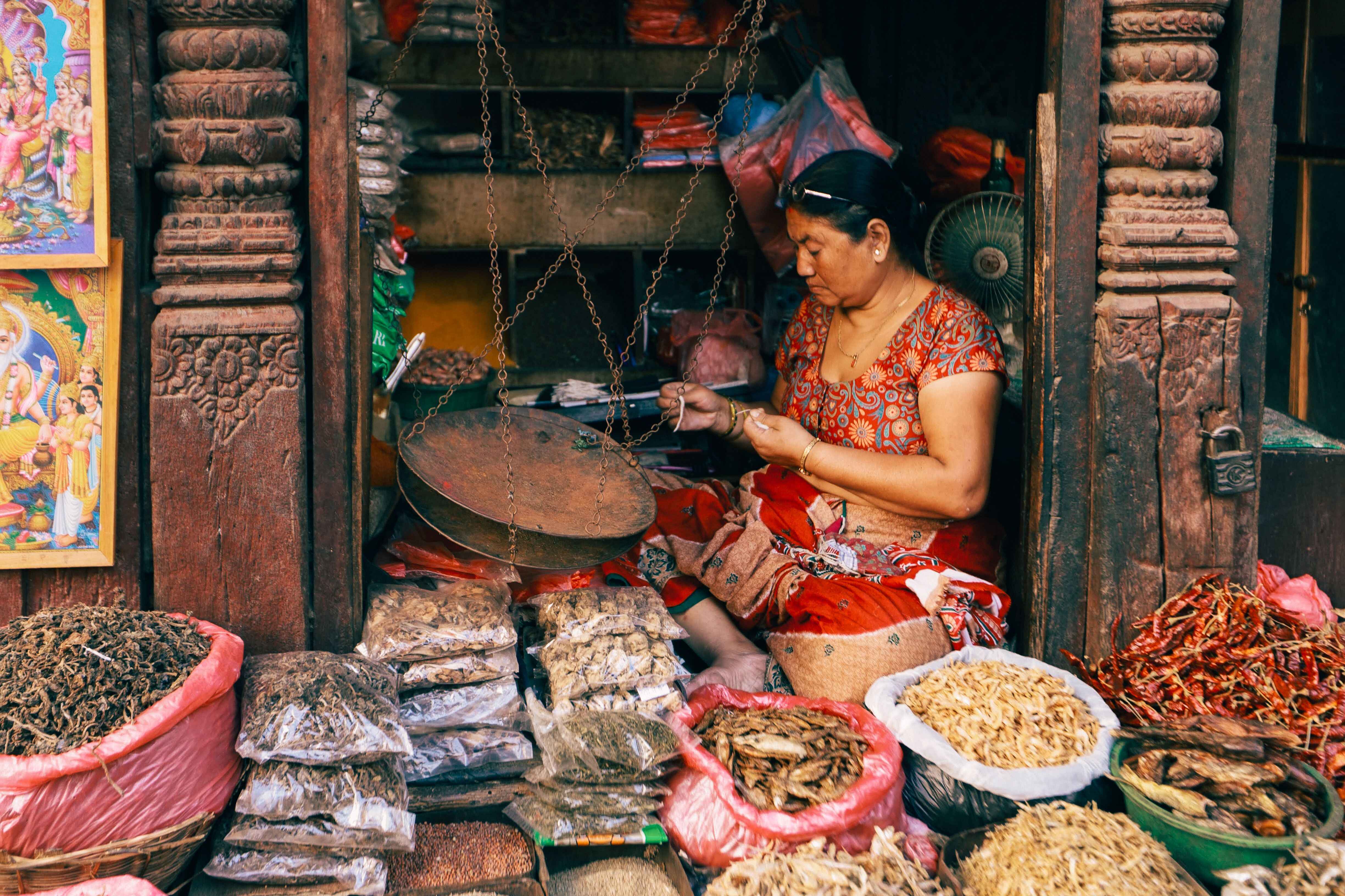
Herbal pharmacies
Traditional massage and oil treatments
Panchakarma programmes
Ayurvedic wellness centres
Herbal products and preparations
For Nepalis, visiting an Ayurvedic practitioner isn't necessarily an exotic wellness experience.
It can simply be another option within the country's broader healthcare landscape.
For international travellers, however, visiting an Ayurvedic clinic can provide an opportunity to understand how a centuries-old medical tradition continues to exist within a modern South Asian city.
The experience becomes less about recreating the past and more about seeing how traditional knowledge has adapted to the present.
Experiencing Ayurveda in Nepal as a Traveller
Travellers interested in traditional wellness have several ways to explore this side of Nepal.
An Ayurvedic experience could involve a consultation with a qualified practitioner, traditional oil treatments, herbal therapies, meditation, yoga, dietary experiences, or a longer wellness programme.
But the most meaningful experiences can go beyond the treatment itself.
You might visit a traditional herbal pharmacy in Kathmandu, learn about the plants used in Himalayan medicine, meet practitioners, explore a rural community, or combine Ayurvedic wellness with yoga and meditation.
This allows travellers to understand the culture behind the treatment, rather than simply consuming it as a spa service.
And responsible travel matters.
Many Himalayan medicinal plants face pressures from commercial harvesting, habitat change, and increasing demand. Travellers should avoid purchasing protected or questionably sourced plants and wildlife-derived products.
The goal should not be to take the Himalayas home.
It should be to understand them.
Contact us for an Ayurveda Tour in Nepal.
Frequently Asked Questions
1. Where can I experience Ayurveda in Nepal?
Kathmandu is the easiest place to find Ayurvedic clinics, hospitals, wellness centres, and traditional treatments. Ayurveda can also be experienced through wellness retreats and traditional healing practices in other parts of Nepal.